

Museum Holy Trinity Tzagkarolon

Museum the Gonias Monastery

Knossos: The magnificent palace of Minos

Greece
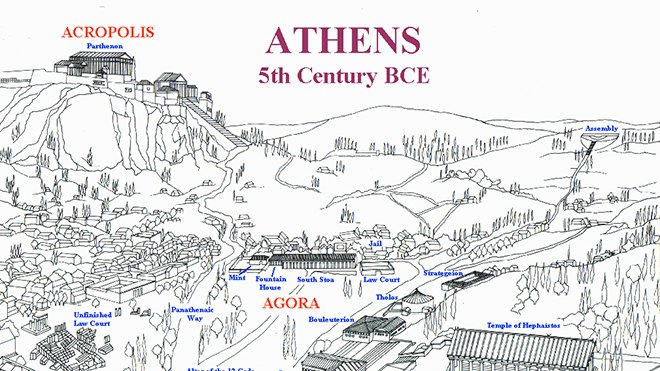
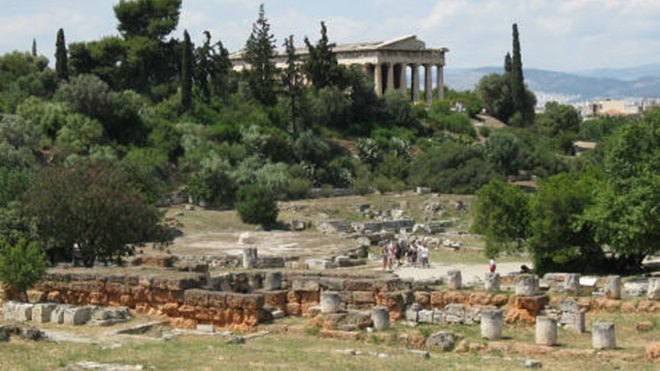
Around the middle of the 6th century BC, the Agora of Athens was founded on the northwest of the Sacred Hill of Acropolis. For the following four centuries, it has been the center of the social and financial life of the city. Around the Agora, various public buildings and shrines were erected.
Around the middle of the 6th century BC, the Agora of Athens was founded on the northwest of the Sacred Hill of Acropolis. For the following four centuries, it has been the center of the social and financial life of the city. Around the Agora, various public buildings and shrines were erected.
After the change of the regime, and the fall of the Peisistratides, intense building activity started in 508/7 BC in the area of the Agora. The first buildings to be constructed were the Old Bouleuterion and the Basileios Stoa.
When the Agora was pillaged by the Persians in 480 BC, many of the buildings were completely destroyed. An intense restructuring occured from the 2nd quarter of the 5th century BC, which continued throughout the 4th century BC. That is when the Poekili Stoa, the Tholos, the New Bouleuterium, the Stoa of Zeus, the South Stoa I, the Mint, the Court, the Temple of Hephaestus, the Temple of Apollo Patroos, the Southwest fount etc were built. During the 2nd century, the Agora obtained a new form, following the construction of the three big structures: The Middle Stoa, The South Stos II and the Stoa of Attalos, a gift of the King of Pergamos, Attalos II.
The Agora sustained damages when the army of the Roman dictator Syllas entered the city, since the Athenians were on the side of Mithridatis, King of Pontos, and not on the Roman side.
In 267 AD, when the Herulians invaded, the buildings of the Agora were once again destroyed. The continuous invasions of barbaric tribes from hte end of the 4th to the end of the 6th century AD caused damages once again to the buildings on the site, which resulted in the final decay of the Agora.
The katholikon of St. Francis monastery was one of the greatest temples of Venetian Candia. When Candia fell to the Turks in 1669, the temple was converted into an imperial mosque dedicated to Muhammad the Conqueror, the conqueror of Constantinople.
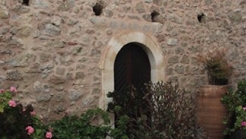
The Toplou Monastery is historical and dates back to its inception in the 15th century. Collapsed by an earthquake in 1612 and was rebuilt with the financial assistance of the Venetians.

Matala with its beautiful long sandy beach,fine gravel and crystal clear deep water and the carved caves in the rocks,home for the famous Hippies back in ‘60s Matala beach festival takes place every year in June in order to keep the myth of Hippies alive!

GNTO Registry Number: 1039Ε60000070000
Number GE.MI. 118062927000