

Greece
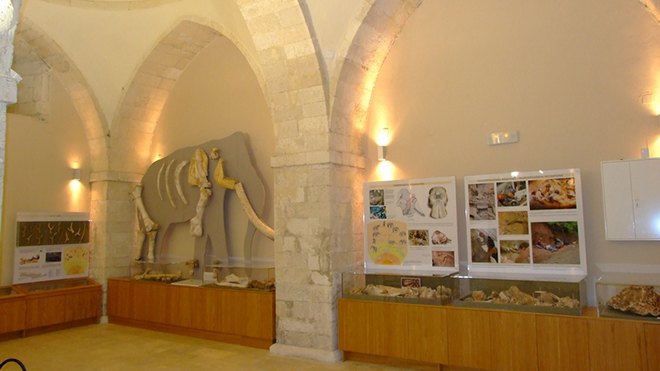
The paleontological collection of the Municipality of Rethymnon, which consists of findings from excavations from all over the prefecture by German scientist Siegfired Kuss (University of Freiburg), will form the basis of the exhibition. The Goulandris foundation has been looking after this collection in collaboration with the University of Athens (Historical Geology and Palaeontology Faculty).
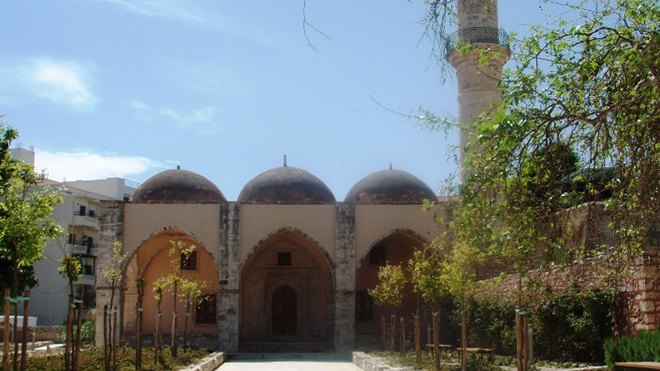
The paleontological Museum Rethymno is located in area Mastambas, mosque Beli Pasha. It is believed that the mosque was built on the Venetian church of San Onoufrios. It has some unique features such as the main door and the minaret which is the oldest in Rethymnon (1789).
Garden 2.5 acres, have already planted trees and plants which flourish in Crete such olive trees, carob, Cretan palm trees, oleanders and laurels and shrubs such as wild rose-trees, will also come across many schinos, Myrties Stone Houses, lavender, diktamo, osier, rosemary and wild lavender.
The paleontological Museum Rethymno mosque Veli Pasha opened on July 10, 2008.

The Inscription Museum is unique in Greece, and the largest of its kind in the world. In it there are 13.536 inscriptions, mostly written in Greek. Chronologically, they cover the times from the first historic times to the paleochristianic, and most of them come from Greece.
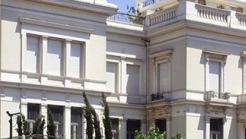
The Benaki Museum is a complex architectural composition, with an interesting history.The aim of the museum is the protection, preservation, and showcasing of the cultural heritage, as well as the connection of it to the modern social and scientific network.
The Folkloral museum of Corinth was founded in 1976, in order to locate, maintain and exhibit folkloral material. The extended collections contain women’s and men’s outfits from many parts of Greece, as well as other handicrafts.



GNTO Registry Number: 1039Ε60000070000
Number GE.MI. 118062927000