

Greece
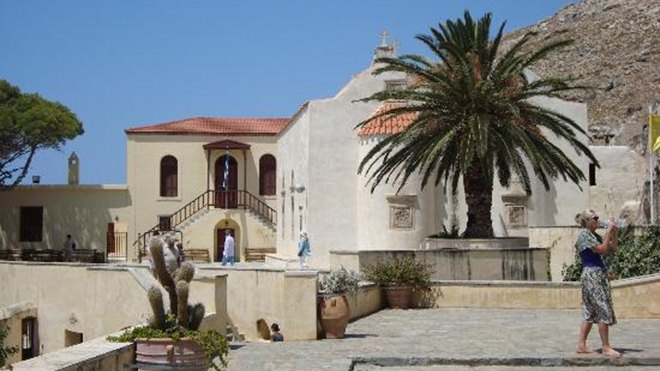
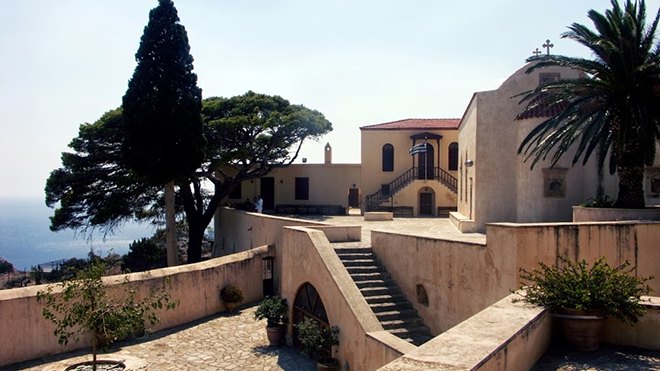
It is Moni Stavropigiaki, that was founded in the 16th century. Has played a major role in Cretan Revolts and indeed in the revolution of 1866, when there was shelter and center of rebels. There was very rich Single with large estates. In 1831 it was established that the first Greek school.
It is Moni Stavropigiaki, that was founded in the 16th century. Has played a major role in Cretan Revolts and indeed in the revolution of 1866, when there was shelter and center of rebels. There was very rich Single with large estates. In 1831 it was established that the first Greek school.
The general ledger is part of the type of two-aisled temple, dedicated to Agios Ioannis Theologian and the evangelization of the Virgin Mary, built in 1836, but has undergone subsequent repairs. The Monastery houses cells, the former was constructed together with prior’s apartment converted into a hostel, the new was constructed together with prior’s apartment in 1900, library and museum.
The collections of Preveli Monastery included:
- Image Gallery,
- Collection of vestments
- Collection of ecclesiastical utensils,
- Collecting relics.
The most important exhibits of the Museum of the Monastery are:
- Sigilio in film, on the pretext of the monastery in Moni Stavropigiaki, monastery, 1798,
- Stavros blessings of gold-plated silver, colorful enamel and semi-precious stones, 1708,
- Silver-embroidered Gospel, 1807,
- Gospel with cover from gold-plated silver, 1847,
- Gospel with silver cover, 19TH century,
- Gold Plated grail, with cover, 1847,
- Collection metal stamps 19TH century,
- Collection metal buckle, 19th-century,
- Collection gold-embroidered vestments, 19th-century,
- Collection metal ecclesiastical functional utensils.
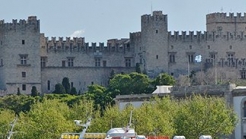
The most important monument of the era of the Knights in Rhodes, is the Palace of the Great Magistrate. During the 1930’s, while under Italian occupation, the building acquired its modern form, being the commanding center as well as the house of the Italian Commander. The mosaic floors of the floor are amazing.
Indeed, the peak sanctuaries were the places where the Minoans imagined that their gods were living. They did not worship their gods in magnificent temples, such as those that have been built in the East. They practiced their religious in rural areas, in caves...
The Archaeological Museum of Lemnos is in Myrina, at the location Romeikos Gialos. The exhibition aims to letting the visitor follow, through the exhibits and the visual material, the history of Lemnos from the Copper era to the Middle Ages, and to understand the island’s importance in the wider area of North Aegean Sea.



GNTO Registry Number: 1039Ε60000070000
Number GE.MI. 118062927000